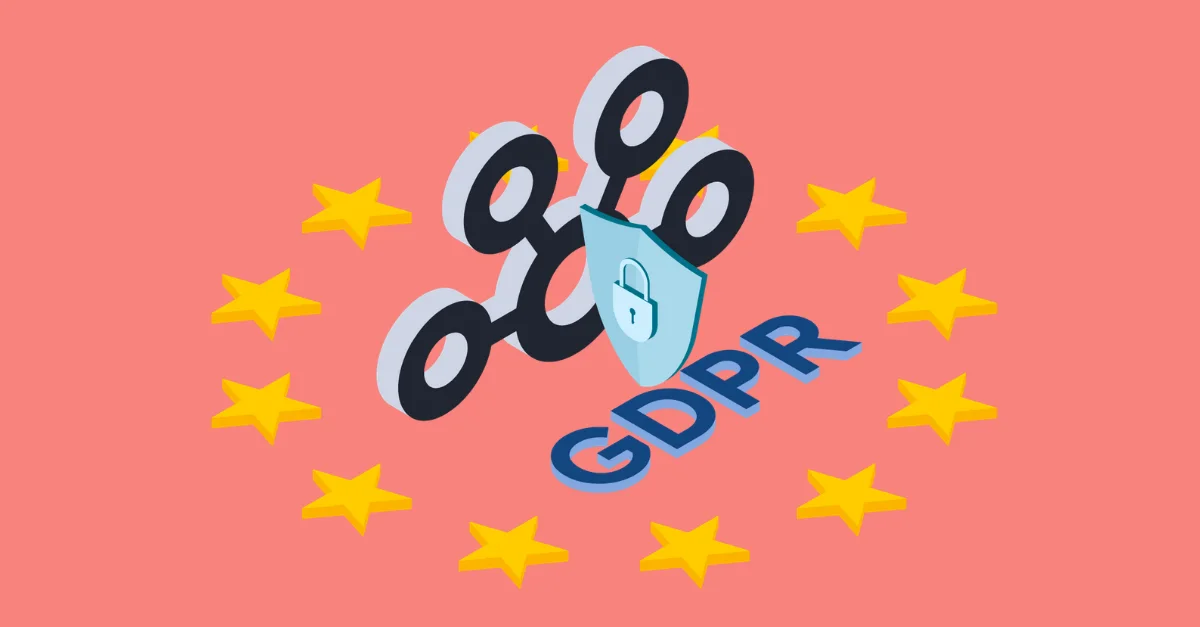
General Data Protection Regulation
Read the March 2021 updated guide Architecting Apache Kafka for GDPR compliance.
GDPR is an important piece of legislation designed to strengthen and unify data protection laws for all
individuals within the European Union. The regulations becomes effective and enforceable on the 25th May 2018.
Our commitment is to provide the necessary capabilities in data streaming systems, to allow your data-driven business
to achieve compliance with GDPR prior to the regulation’s effective date.
What are the key points regarding data activities ?
In summary, here is a list of important changes that will come into effect with the upcoming GDPR
- Right to request copy of personal data
- Right to be forgotten
- Compliance obligations to keep detailed records on data activities
“Under the
, the GDPR provides expanded rights for individuals in the European UnionExpanded rights for individuals
by granting them, amongst other things, the right to be forgotten and the right to request a copy of any personal data
stored in their regard.”
How GDPR relates with Apache Kafka ?
As Apache Kafka is one of the most prominent data streaming systems in the modern enterprise, the majority of data is
continuously streaming in and out of various systems. Consider a typical Avro encoded message flowing through Kafka:
{
  "type": "record",
  "name": "CustomerRecord",
  "namespace": "com.acme.system",
  "doc": "Schema for Customer Records",
  "fields": [
    {
      "name": "customerId",
      "type": "long",
      "doc": "The unique customerId"
    }
  ]}
Avro schema definition allows attaching additional metadata which can be used to annotate particular fields.
By injecting "gdpr" : "customerId"
data.
    {
      "gdpr": "customerId",
      "name": "customerId",
      "type": "long",
      "doc": "The unique customerId"
    }
Now let’s review a streaming topology for a typical IoT
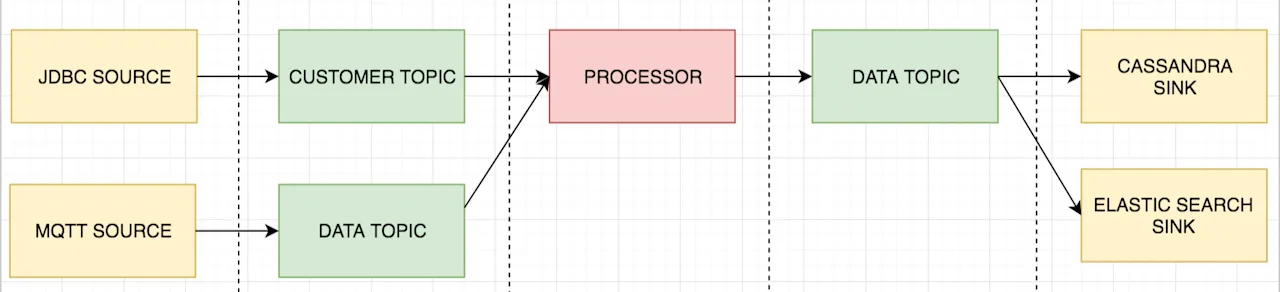
Customer data are collected via a JDBC Source and additional device events are sourced from an MQTT system. We are
processing data (join, filter, aggregate) and placing them into another topic, before pushing them to down-stream data stores.
To track the data, and have “detailed records on data activities” we need to be aware of the full data lineage,
even when transformations are in place:
INSERT INTO data_topic_2 SELECT customerId AS cid, ...
A Kafka SQL processor, for example can rename a field
of identifying which other topics or data stores contain now customer information.
GDPR compliance with Apache Kafka
Compliance obligations to keep detailed records on data activities
Having GDPR awareness requires as a first step, identifying all the points, where data about individuals are processed
or stored. In the case of Apache Kafka, you will expect tracking i) topics, ii) connectors and iii) processors:

Topics with data about individuals

Connectors with data about individuals

Processors with GDPR data
Tracking as well as auditing all activities can allow us to respect the Compliance obligations to keep detailed records on data activities
lifecycle and timeline of the customer’s data.
Right to request copy of personal data
Once a request for a copy of personal data is received, based on the GDPR regulations, we will need to be in a position
to retrieve all personal data for the particular individual. In the case of IoT that could include unaggregated and
aggregated device data; thus becoming quite a challenge.
With a lineage
gdpr
automate the collection of personal information, both from Kafka topics, as well as target datastore systems.
Thus executing a query:

Should collect all the data related to the particular individual across all topics as well as give us a report that
a particular Cassandra table and a particular Elastic Search index have the potential to contain additional information.
Right to be forgotten
The right to be forgotten, becomes one of the hardest challenges because of data immutability. Apache Kafka does not
support deleting records, and although some eventual deletion
- A topic to be compacted
- A message with the same
key
- The compaction process to eventually kick in
What we need to have (as a first step) in terms of topics, is a complete list of all the topics with data about individuals, with the
associated information regarding the retention period and if the topic is compacted:

Let’s drill into the right to be forgotten
What we would expect to happen, is the customer record to be removed from the source of truth
a SQL or NoSQL database. If we are using a Kafka Connector with CDC (Change Data Capture) capabilities, the deleted
record will be picked up by the connector, and a nullable record will be pushed into the customer topic.

If the Cassandra sink or ElasticSearch sink are CDC aware, they can automatically remove the relevant records from the
target systems. If the Kafka sink connector, is not CDC aware, or is writing to an immutable store (i.e. S3 or HDFS)
then some additional mechanism will have to kick-in to wipe that data.
Conclusions
As modern data-driven businesses are running more in real-time, and Apache Kafka becoming a central component for
messaging across systems, it physically becomes the point of tracking as well as enforcing the new regulations.
As Data Protection regulations evolve and fines can be up to €10 million or 2% of the company’s global annual turnover
of the previous financial year, or up to €20 million or 4% of the company’s global annual turnover of the previous
financial year, whichever is higher, integrating data protection ‘by design and by default’ is becoming a high priority
across many enterprises that deal with EU based citizens.
This is the first of a series of articles, regarding how an organization could tackle those regulations at design time, to provide a framework to ensure that compliance is in place. If you are interested more about GDPR compliance with Apache Kafka feel free to contact us to learn more.